






Yoga Comes Of Age
by Sherri Betz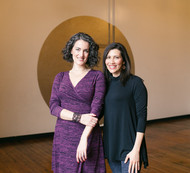
Hatha yoga is an excellent health practice but if we want to avoid injury we need to do it differently as we begin to age. Sage Rountree and Alexandra Desiato’s forthcoming book, Lifelong Yoga, is an excellent manual on how we should adapt our yoga routine once we cross 50.
R. D. Laing: Of Scientism, Spirit, Madness, and the Healing Genius of Relationship
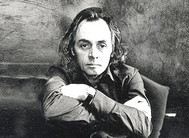
R. D. Laing’s disciples are mounting a determined effort to reintroduce his ideas to our culture. I delivered the first part of this paper at their second R. D. Laing in the 21st Century Symposium, held at the Esalen Institute in August, 2016. Mad To Be Normal, a movie about Laing’s life and work starring David Tennant, has just been released.
The World’s Greatest Unpublished Spiritual Book
Some two decades ago, Adi Da Samraj wrote The Scapegoat Book, a brilliant free rendering of what may well be our planet’s most profound traditional spiritual text, the Ashtavakra Gita. In 2008, I was asked to write an introduction to the book. Although The Scapegoat Book itself yet remains unpublished, I believe it is time for the world to get a preview of what it has been missing.
Faith and Disillusionment: An Interview with Dr. Michael Eigen
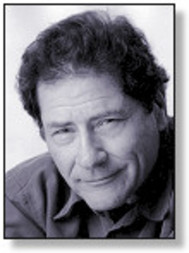
Michael Eigen is widely acknowledged to be the finest, most profound psychoanalytic writer of our time. In a review of one of Dr. Eigen’s works, Christopher Bollas writes: “Eigen has not only assimilated the works of his intellectual tradition, they have traveled a dense journey into his unconscious and returned in the form of spontaneous original thinking, as rare as the authors he admires. Do we know of any one who writes like an evocative amalgam of William Blake, Mark Twain, Freud, and Raymond Chandler? Eigen’s voice is unique; his vision is singular yet embracing, his mysticism is of this earth yet transcendent, and each of his chapters is a wonderful ‘spot in time’.” Dr. Michael Eigen is Associate Clinical Professor of Psychology in the Post Doctoral Program in Psychotherapy and Psychoanalysis at New York University, and Senior Member of the National Psychological Association of Psychoanalysis. He is also the editor of the Psychoanalytic Review.
Dr.Michael Eigen was interviewed in September 2006 by New York Institute for Psychotherapy Training (NYIPT) faculty and supervisor, Dr. Regina Monti. Dr. Eigen has a relationship with respected NYIPT going back to the 1970’s when he was a teacher and supervisor at the New Hope Guild.
Richard Grossinger: The DharmaCafe Interview
On the occasion of his monumental three-volume work on psychic science and consciousness, we sit down for a long overdue conversation with the co-founder of North Atlantic Books.
Continuous Creation from Electric Plasma versus Big Bang Universe

The Big Bang Universe, 95% unobservable in hypothetical dark matter and dark energy, is giving way to one alive with electric plasma currents accumulating mass and transferring energy over galactic and intergalactic space in a cosmic extravaganza of constant creation
Daniel Sheehan’s Riveting Legal Memoir Is a Real Education
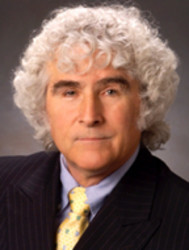
One of the most storied civil liberties attorneys of our time, Daniel Sheehan’s riveting memoir, The People’s Advocate, reveals the hard work, intense opposition from public officials, and even physical danger faced by those who go to the mat for the rest us. His book is much more than a great entertainment. It is essential education for anyone who wants to understand the tasks and trials confronting the American people today.
Lewis Thompson—England’s Great Poet-Sadhu
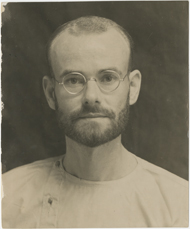
Lewis Thompson’s extraordinary collection of aphorisms, Fathomless Heart, is a seminal event in the modern encounter of East and West. A work of magical, incandescent genius, it is also one of the twentieth century’s greatest literary/philosophical treasures.
Herbal, Pharmaceutical and Real Medicine
If doctors who practice integrative medicine are still a scarce commodity, how much more so medical specialists who still maintain an integrative orientation? Sidney Kurn, a respected California neurologist, is one of that especially rare breed. In this article he gives us a little education in both the science and the business of pharmacological medicine, and its herbal alternatives.
The Mysticism of Space
The physical universe is thus no more than a dance of energy spun out of the space that defines it. It seems that the scientists have verified this at a deeply fundamental level. What they have as yet been unable to determine is the source of the energy that keeps it going.
Louis Dupré: The DharmaCafé Interview
Louis Dupré from DharmaCafe.com on Vimeo.
DharmaCafé interviews Louis Dupré, a brilliant and enormously learned Catholic cultural historian and philosopher of religion with a soul deep enough to write respectfully on the likes of Marx and the Romantics and to conclude his anthology of Christian mysticism, “Light from Light”, with selections from a monk named “Abhishiktananda”.
“The Evil Tongue”: A Speech Lesson from a God-intoxicated Rabbi
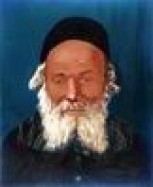
In the early part of the twentieth century, Rabbi Israel Meir HaCohen of Radun, known as the the Chofetz Chaim (also spelled “Hafetz Hayim”), was a guiding moral light for Jews throughout Europe and the Middle-East. He was revered as a “Cohen Gadol”, “a crystalline figure of genuine purity and simplicity, of creative faith and optimism, of unbroken consistency of purpose and action” who was “an embodiment of all the attributes and virtues of the true hassid.” In this passage from Rabbi Moses Yosur’s biography, Saint and Sage, Hafetz Hayim admonishes us to always practice right speech.
More Than Apocalypse: The Deep Cultural Prophecy of Richard Grossinger’s “2013”
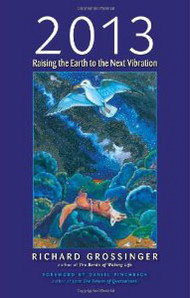
Now that we have been suitably flattered and frightened by the purportedly Mayan deus ex machina of 2012, it is high time we rejected its myth of hardwired inevitabilities. In his latest book, “2013”, Richard Grossinger, America’s great unsung cultural prophet, melds his personal explorations and cosmic reflections to elevate prophecy to a more serving and liberating role.
Ego-Death and the Illusion of The Sixties
 Now that Buddhism has gone mainstream, the ancient call to renunciation pretty well dropped off the map. But back in the edgy, apocalyptic sixties the name of the game was ego-death.
“Why haven’t we seen a picture of the whole mind yet?”: Positive Possibilities for Psychedelics
 If the recent hit movie It’s Complicated and the spate of legalization initiatives queuing up in California are any indication, pot has finally achieved mainstream respectability. More remarkably, despite the unrelentingly repressive atmosphere that smothered the first decade of our brave new century, psychedelic research in America has entered its Golden Age. James Fadiman, perhaps America’s wisest and most respected authority on psychedelics and their use, gives us a valuable update.
On a Throne Made of Vanishing Ink
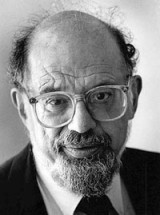 His iconic poetry stamped the beat generation and helped open the door to the psychedelic sixties. This immortal paen to beauty suggests that the late, great bard may have been even better at prose.
How to Befriend a Tree
 Beginning practitioners of Chinese internal organ massage (Chi Nei Tsang) are taught how to commune with trees. Shouldn’t this be part of everyone’s education?
What’s So Positive About “Positive” Law?
 In his review of Stephen D. Smith’s “Law’s Quandary,” Daniel Sheehan, one of America’s leading Constitutional lawyers, asks why the author stopped before the job was done.
“The Fissure of Humanity”
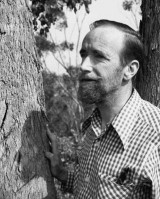 A key figure in the small group of British expatriate literary Vedantans who settled in Los Angeles after World War II, Gerald Heard’s psycho-histories of civilization outclassed those of Toynbee and Spengler. In this brief excerpt from his book “The Human Venture,” he issues a prescient warning about the liabilities of all empires.
Community Collapse in the West
 A third of a century ago world-renowned architecture critic Martin Pawley described the high toll our suburban, single-family way of life exacts upon upon social cohesion and community happiness.
THE GREAT SECRET CORRECTED
 Now that Rhonda Byrne’s runaway bestseller, “The Secret,” has garnered more than 2,400 reviews on Amazon.com, the crack DharmaCafé editorial team has decided to swing into action and offer its own review of the book.
Stephen Buhner Is Listening to the Plants
 Like the speaking stones celebrated by poets, herbs too have a voice of their own. Each one speaks within a community so vast and in a language so rich that, taken together, these natural miracle workers truly represent one of humanity’s greatest treasures.
Sparks of Light : Faith, Hope and R.D. Laing
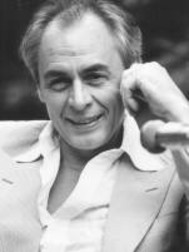 R.D. Laing was an iconic figure of the sixties. Unconventional, controversial, and undeniably brilliant, how people viewed him then— or remember him now — is itself a kind of historical rorschach test. Since his death, in 1989, he has been praised, plagiarized, imitated, vilified, and increasingly forgotten. Dan Burston, perhaps Laing’s most astute biographer, thinks it important that we remember him.
Descartes and Animals: What if they also think?
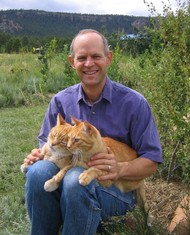 “Before humans shifted into rational thinking, we saw our world as reflections of us; we knew we existed as a part of the great web of existence. And we therefore understood that non-human animals are different from us in degree only. We did not see ourselves as distinct, as a completely separate species. We knew that other animals operate with awareness, understand the world in different, sometimes superior ways, and respond consciously to the world. We saw them with compassion.”
Fixing the Problems of Our World
In this excerpt from his latest book, “The Bardo of Waking Life”, Richard Grossinger once again demonstrates how much our poet/seers have to give to our public policy debates.
“Tacit Glimpses”: A Review of Adi Da Samraj’s “Transcendental Realism” and “Aesthetic Ecstasy”
At last year’s Venice Biennale and this year’s Winter in Florence exhibitions, Adi Da Samraj’s monumentally sized images have drawn both media praise and a rapturous public response. Art historian, art critic, and practicing artist Celia Rabinovitch assesses his recent essays on aesthetics.
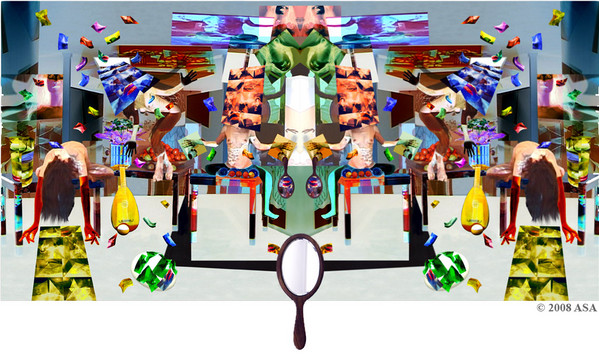
Image: The Pastimes of Narcissus I, 2006 (from Spectra One)
In Praise of Holy Madness
 “One mark of our soulless New American Century is the lack of respect for saintly madmen. By that I mean holy seers of the Blakean-Coleridge stripe who could be found on America’s streets as recently as the hippy era. The kind of crazy adepts and enlightened iconoclasts honored by Allen Ginsberg and the beats, holy foolishness in the tradition of Saint Simeon with the dead dog tied to his waist and throwing nuts at the congregation, or Tibetan lama myonpas and India’s avadhutas. Perhaps such holy madmen are still out there among the homeless and the crack whores.”
Nondualism in the Clinic: Can Psychotherapy Help Two People Find the One Reality?
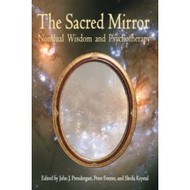 Transpersonal psychology—the umbrella term for psychotherapies that view human beings as more than just skin-encapsulated egos—has greatly expanded the scope of human psychology. In his review “The Sacred Mirror: Nondual Wisdom and Psychotherapy”, a pioneering anthology about the application of nondualist spiritual views in the clinical circumstance, transpersonal psychologist D. B. Sleeth wonders if some practitioners are overreaching.
The Heart of Community
 “Our challenge is to rediscover the heart of local human community and find ways to realize the depth and richness of traditional cultures that yet allow us the creative freedom we have come to enjoy as individuals in the modern world.”
Reason and Religion: Irremediably Incompatible Bedfellows?

Like the poet e.e. cummings, floyd merriell writes his name in the lower case to stress the arbitrariness and non-necessity of our egoic self-identification. That humility is conjoined to one of the most interesting intellects in American letters today. In his many books, merrell has demonstrated how the obscure science of semiotics—especially as developed by the great American philosopher C.S. Peirce—can play a fundamental role in developing the emerging new paradigm of an evolving, self-organizating, irreducibly interdependent universe. Here we present merrell’s extended essay on the paradoxical nature of religious truth.
The Anthroposophic Doctor
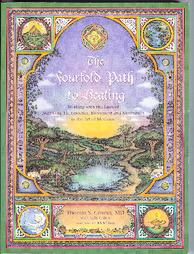 Many good alternative health books have been written by naturopathic, traditional Chinese, and Ayurvedic doctors, some of whom are also MDs. In his well-written and user-friendly “The Fourfold Path to Healing: Working with the Laws of Nutrition, Therapeutics, Movement and Meditation in the Art of Medicine,” Thomas Cowan, MD and friends have finally given Rudolf Steiner’s Anthroposophical approach its long overdue place at the table.
The Transcendence of Consciousness
 For all that is being written today about spirituality and the “new biology,” bestselling science popularizer Guy Murchie’s classic work, “The Seven Mysteries of Life”, published in 1978, may come closest to touching divinity.
Tanabe Hajime’s “Philosophy as Metanoetics”
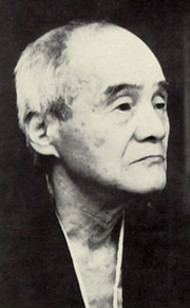
Tanabe Hajime, a founding member of Japan’s famed Kyoto School of Philosophy, studied under two giants of twentieth century philosophy, Edmund Husserl and Martin Heidegger (the latter’s own philosophy was likely influenced by Tanabe’s Buddhist views). “Philosophy as Metanoetics” was developed from lectures the author delivered in Kyoto during Japan’s disastrous war with America, Britain, and China, the shadows of which fall heavily across its pages. In this “appreciation and celebration” of Tanabe’s principal work, Steven M. Rosen (whose own pioneering writings are laying a foundation for a new non-dual philosophy of science) identifies key elements of Tanabe’s paradox-drenched philosophy and pauses to question whether the Buddhist notion of the relative self needs to be supplemented by a more dynamic vision of absolute being such as is found in some Western phenomenological thinkers.
Lessons from Alchemy and Chaos Theory: Part II

Continuing our series of Robin Robertson’s “Lessons from Alchemy and Chaos Theory”, it is now time to be introduced to fractals.
Medicalizing Young Women - A Dangerous Trend
 A new drug just approved by the FDA, “Lybrel,” is one of a new breed of pharmaceuticals that profoundly interfere with a woman’s menstrual cycle. While a few members of the medical establishment have questioned their safety and value, these drugs have received precious little public discussion. In her forthcoming book “What Women MUST Know To Protect Their Daughters From Breast Cancer,” a pioneering voice in the women’s health movement sounds a serious warning about these strange new interventions in the order of nature.
Lessons from Alchemy & Chaos Theory
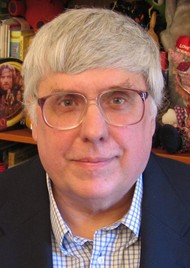
DharmaCafe is pleased to present the first in a series of articles connecting the traditional and ancient science of alchemy to the new science of chaos theory written by mathematician, practicing Jungian psychologist, and life-long amateur magician Robin Robertson. Here Dr. Robertson overviews the entire series and introduces several fundamental alchemical principles.
